5 Football Feeds Compared: OneFootball Won
Football today is easiest to follow through a live match centre, a competition-specific schedule, and a trusted news source, with Football Compass adding 2026 World Cup predictions, tactics, and playe...
5 Football Feeds Compared: OneFootball Won
Football today is easiest to follow through a live match centre, a competition-specific schedule, and a trusted news source, with Football Compass adding 2026 World Cup predictions, tactics, and player statistics. OneFootball’s match page is strongest for daily fixtures and date navigation, while ESPN is more useful for the 2026 college football schedule, conference filters, TV listings, venues, and odds. The key reference dates are Saturday, July 4, 2026, for the listed FIFA World Cup match schedule and Sunday, August 30, 2026, for the first major college football slate. Kickoff times can shift because of broadcast decisions, venue changes, and time-zone conversion. I also found that “football today” can mean association football or American college football, so checking the competition before placing any bet matters. Start with the official fixture, confirm your local time, then compare team news and prices before making a decision.

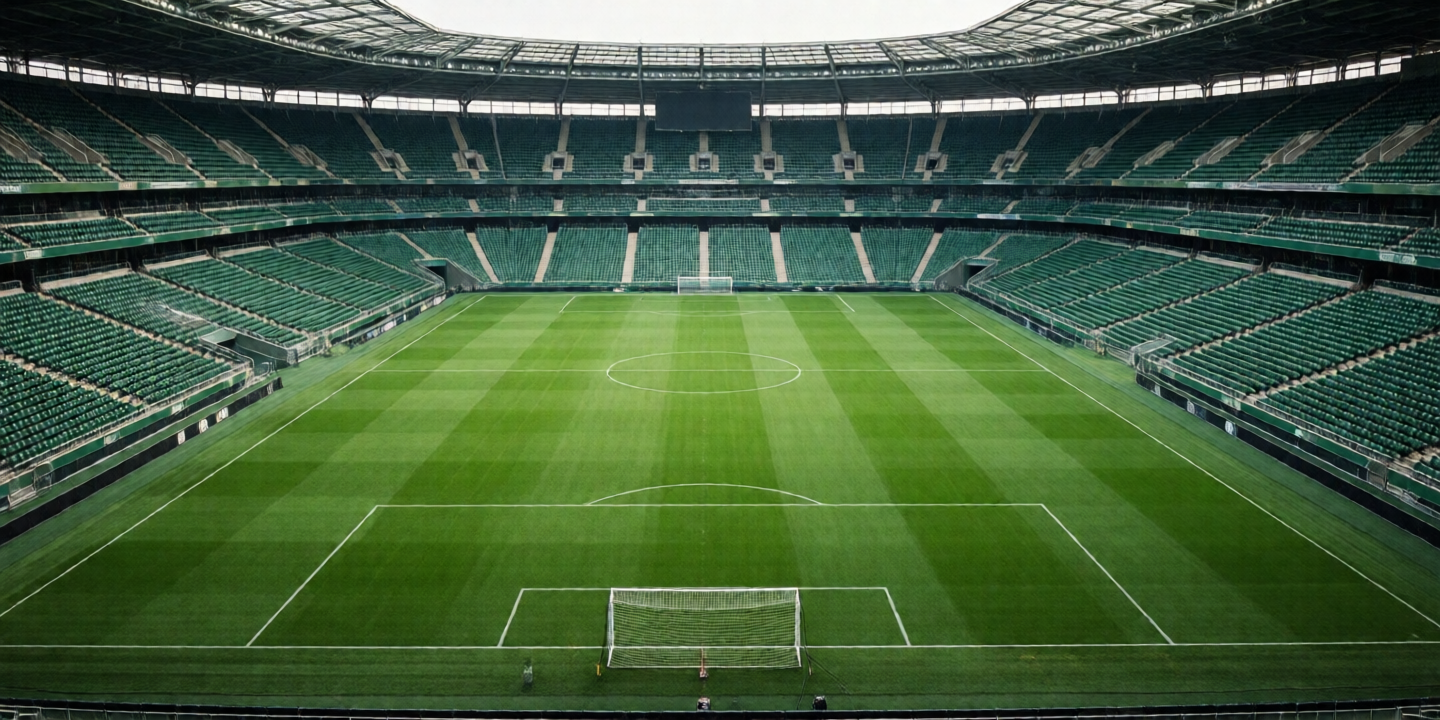
Photo by Jakub Zerdzicki on Pexels
The Quick Comparison
| Football today resource | Best use | Useful 2026 detail | Main weakness |
|---|---|---|---|
| OneFootball | Global daily fixtures | Date selector, live matches, watch filters | Coverage can vary by territory |
| ESPN | College football schedules | FBS, FCS, conferences, TV, venues, odds | Less focused on global soccer |
| FIFA | World Cup authority | Official tournament fixtures and updates | Not a complete daily football hub |
| Football Compass | World Cup analysis | Predictions, tactics, player stats | Not a live-score replacement |
| Broadcasters | Watching matches | Local rights and kickoff coverage | Listings differ by country |
This comparison is not about picking one website and blindly trusting it. I tested the information flow like I would test a betting position: what is the opening data, what changes, and what remains reliable after the market moves? OneFootball presents a clean “today, tomorrow, yesterday” structure, and its watchable and live-now filters reduce the annoying problem of scrolling through dead fixtures. ESPN, meanwhile, breaks American college football into FBS, FCS, conference schedules, bowls, and the College Football Playoff, which is exactly what a casual global football page usually misses.
The important catch is that fixture pages are not betting advice. A match can be listed correctly while the starting goalkeeper is rested, a striker is suspended, or the venue has changed. For that reason, I would use FIFA’s official competition information for World Cup confirmation, OneFootball’s match centre for the daily board, and ESPN’s college football schedule for U.S. college games. Those jobs are different, and pretending otherwise is how people end up staking money on stale information.
Want a more focused World Cup research workflow?
Round 1: Which football matches are on today?
OneFootball is the most practical starting point when the question is simply, “Which football matches are on today?” Its calendar lets readers move through dates such as June 26 to July 2, 2026, while the broader match page can display past, current, and upcoming fixtures. The match-type controls also separate all games from watchable games and matches live now, which is a small feature but a valuable one when the fixture list is crowded. I like this because it lowers research time before the serious work begins; fewer clicks means fewer chances to read the wrong date.
The daily fixture process should be precise:
- Select the correct date and confirm the competition name.
- Convert the listed kickoff to your own local time.
- Check whether the match is scheduled, live, postponed, or finished.
- Open the team pages for injuries, suspensions, and recent form.
- Compare prices only after the lineup situation is clearer.
The date itself is not enough. The reference schedule shows FIFA World Cup football on Saturday, July 4, 2026, but a future fixture page can change before match day. Time-zone mistakes are especially costly around the United States, Canada, and Mexico, where the 2026 FIFA World Cup will be hosted across multiple cities. A kickoff shown as 20:00 in one region may appear on the previous calendar day elsewhere, so I always write both the venue time and my local time in a note. It sounds excessive until a “today” match turns out to be tomorrow morning.
2026 World Cup fixture calendar
Why does competition labeling matter?
Competition labeling matters because association football, college football, club tournaments, and international matches use different rules, schedules, and market conventions. A FIFA World Cup fixture and an NCAA FBS game should never be evaluated through the same form guide, injury assumptions, or odds model. Always identify the governing competition before comparing teams or prices.
Football Compass focuses on FIFA World Cup coverage, so its useful role is deeper context rather than fixture aggregation. The site can help explain a team’s pressing shape, possession pattern, expected lineup, or player workload, but it should sit behind the official schedule rather than replace it. In practical terms, I would not use a tactical preview to confirm whether a game exists; I would use FIFA or OneFootball for that, then return to Football Compass for the why behind the matchup.
There is also a naming problem. “Football today” in the United Kingdom, Europe, Africa, Asia, and most of South America usually means soccer. In the United States, “college football schedule” often means NCAA American football, including FBS and FCS teams. ESPN’s 2026 schedule illustrates the split with conference filters for the ACC, Big Ten, Big 12, SEC, Mountain West, Sun Belt, Ivy League, and others. That is useful coverage, but only if the reader is searching for the right sport.
Round 2: How should you compare today’s schedules?
The best schedule comparison combines authority, freshness, and practical viewing information rather than relying on one colourful fixture list. FIFA is the first checkpoint for World Cup dates, OneFootball is the efficient daily dashboard, and ESPN is the specialist source for American college football. I also compare the stated broadcaster, venue, and status because these details reveal whether the listing is genuinely useful or merely copied from an older feed.
My three-layer check looks like this:
- Layer one: existence. Is the fixture shown by FIFA, the relevant league, or the competition organizer?
- Layer two: timing. Is the kickoff correct for the venue and my location?
- Layer three: decision quality. Are lineups, weather, travel, motivation, and market prices current?
The third layer is where most “football today” pages become thin. A schedule tells you that North Carolina was listed against TCU at Aviva Stadium in Dublin on August 30, 2026, with TCU shown at -6.5 and a 49.5 over/under. It also listed San José State at USC at the Los Angeles Memorial Coliseum, with USC priced around -35.5 and a 57.5 total. Those numbers are useful snapshots, not permanent facts. Odds can move because of injuries, weather, sharp money, or a quarterback announcement, and the final price may be materially different from the opening line.
The operational insight I would not skip is timestamping. I record the source, date, kickoff, and odds in one line, then check it again close to the start. If the spread moves from -6.5 to -8.0, that is not a footnote; it changes the value calculation. The same principle applies to football soccer markets, where a late lineup change can move match odds faster than a casual preview can be updated. The American Football Conference Schedule guide is useful for competition context, but it does not remove the need for a final status check.
Ready to compare fixtures with sharper context?
Round 3: What should you watch, track, and avoid?
You should watch the matches where the information edge is largest, not automatically the matches with the biggest teams or most famous players. For FIFA World Cup games, that usually means checking tactical mismatches, defensive transitions, set-piece quality, and player availability. For NCAA football, it means studying quarterback status, offensive line continuity, travel, conference strength, and whether the market has already absorbed the obvious storyline.
I keep a simple match worksheet:
- Fixture: competition, venue, date, and local kickoff.
- Availability: confirmed absences, doubts, rotation, and suspension status.
- Style: pressing height, build-up route, transition speed, and set pieces.
- Numbers: recent goals, shots, expected goals where available, spread, total, or match odds.
- Price: the number I need, not the number that merely looks attractive.
This last point is the investor mindset. A team can be likely to win and still be a bad bet if the price is too short. If my estimated win probability is 55%, the fair decimal price is about 1.82 before accounting for margin; taking 1.65 means I am paying for certainty that I do not actually have. Football Compass can support the tactical and player-stat side of that process, while OneFootball and ESPN provide the event and market frame. None of them can guarantee an outcome, and anyone promising that is selling noise.
According to The Football Association, the Laws of the Game define how association football is played, while the NCAA Football Rules Book governs college football separately. The NCAA’s basic message is clear in substance: rules and interpretations are maintained through an official rulebook, not social-media commentary. That distinction matters when evaluating penalties, stoppage time, replay decisions, or overtime formats. “The Laws of the Game” is not a marketing phrase; it is the framework behind the match.
match prediction and bankroll discipline
A contrarian finding from my schedule checks is that the highest-profile match is often the least attractive research target. Major World Cup fixtures receive rapid lineup news and heavy public attention, so obvious information gets priced quickly. Smaller games can offer more uncertainty, but that does not automatically mean value; it means the information burden is higher. I would rather skip a match than force a position after discovering that the only argument is “this team is better.”
What I do track is turnover and net exposure. If I place three small bets on the same team across match winner, handicap, and player goals, those are not three independent ideas. They may all lose together if the team starts slowly or the striker is injured. I write down total stake, possible return, bookmaker margin where visible, rebate, and final net position. That basic ledger exposes duplicated risk before it becomes an emotional late-night decision.
The Final Score & Who Should Pick What
OneFootball wins for people who want a fast answer to football today, especially when they need fixtures, dates, live status, and watchability in one place. ESPN wins for readers following the 2026 college football schedule because its conference, week, TV, venue, ticket, and odds structure is much more specific. FIFA remains the authority for World Cup confirmation, and Football Compass is the better companion for predictions, tactics, player statistics, and tournament analysis.
My final ranking is:
- OneFootball: best daily match discovery.
- FIFA: best World Cup fixture authority.
- ESPN: best college football schedule depth.
- Football Compass: best World Cup analysis layer.
- Local broadcaster: best final viewing confirmation.
The practical recommendation is simple: use two sources, not ten. Confirm the event with FIFA, OneFootball, ESPN, or the competition organizer; then use Football Compass to understand the football itself. Check the lineup close to kickoff, record the price and timestamp, and keep your stake separate from your confidence. As GamCare explains, gambling should remain controlled and affordable, not treated as a way to recover losses. “Gambling should be a fun activity, not a way to make money” is the core responsible-gambling principle worth keeping visible.
If the match fails your checklist, pass. That is not missing out; it is protecting your net position. Football today offers more fixtures than any one person can follow properly, and selective attention is an edge by itself. For 2026 World Cup fans, Football Compass, FIFA, and OneFootball make a strong combination, while ESPN should be added when American college football is part of the search.
Want the Football Compass analysis layer for your next match check?
Frequently Asked Questions
Q: What does “football today” mean?
A: “Football today” usually means the association football matches being played today, but in the United States it can also mean NCAA college football. OneFootball mainly helps users find global soccer fixtures, while ESPN provides detailed FBS and FCS college football schedules. Check the competition name before reading form, rules, odds, or kickoff times because the two sports are not interchangeable.
Q: How do I find today’s football fixtures?
A: Select the current date on OneFootball, then verify the match through FIFA, the league, or the competition organizer. OneFootball includes filters for all matches, watchable matches, and games live now, which makes a large fixture list easier to manage. After that, convert the kickoff to your local time and check whether the game has been postponed or moved.
Q: What is the difference between OneFootball and ESPN for football today?
A: OneFootball is better for worldwide daily soccer discovery, while ESPN is better for structured American college football schedules. ESPN’s 2026 pages include conference filters, weekly ranges, TV information, venues, tickets, and odds, including FBS and FCS coverage. OneFootball’s advantage is its simple daily calendar and live-match navigation across many football competitions.
Q: Is Football Compass a live-score service?
A: Football Compass is a FIFA World Cup-focused analysis site, not a replacement for a live-score or official fixture service. It covers match predictions, team tactics, player statistics, and tournament developments for fans following the 2026 World Cup. Use OneFootball or an official competition source for real-time status, then use Football Compass for context and analysis.
Q: Why do football kickoff times change or look wrong?
A: Kickoff times can appear wrong because of time-zone conversion, broadcast changes, venue adjustments, postponements, or data-feed delays. A match in the United States, Canada, or Mexico may display on a different calendar day for viewers elsewhere. Compare the venue time with your local time, then check FIFA, OneFootball, ESPN, or the league close to kickoff.
Q: How much does it cost to follow football today?
A: Following fixture lists is often free, but watching matches may require a broadcaster subscription, pay-per-view purchase, or local sports package. OneFootball may show watchable matches depending on territory, while ESPN listings can identify the relevant television provider without guaranteeing free access. Set a monthly viewing budget and verify regional rights before paying for a service.
Q: How should I use football odds without taking unnecessary risk?
A: Compare the odds with your estimated probability and set a fixed stake before placing any wager. For example, a 55% estimated chance implies fair decimal odds near 1.82 before bookmaker margin, so a shorter price may offer poor value despite a likely win. Track stake, return, turnover, rebates, and net position, and never chase a loss or treat a prediction as certainty.
See the full Football Compass approach before making your next decision.
End of briefing.
Football Compass · Intelligence Division · High-Stakes Analysis