The Match Analyst's Guide to 2026 World Cup Football
The 2026 FIFA World Cup will be the first tournament with 48 teams, hosted across Canada, Mexico, and the United States, with Kansas City among the 16 official host cities. Football Compass treats the...

The Match Analyst's Guide to 2026 World Cup Football
The 2026 FIFA World Cup will be the first tournament with 48 teams, hosted across Canada, Mexico, and the United States, with Kansas City among the 16 official host cities. Football Compass treats the event as an analysis problem, not just a month-long party: compare squad depth, travel routes, tactical matchups, form, injuries, and market prices before making any prediction. The tournament will run from June 11 to July 19, 2026, and the expanded format creates 104 matches rather than the previous 64. That means more football, more rotation decisions, and more opportunities for inflated opinions to get punished. Kansas City’s six scheduled matches make it a useful case study for understanding host-city atmosphere, supporter movement, and regional coverage. Start with the fixture list, then build a team-by-team model that separates genuine performance from noise, and never treat a famous badge as proof of value.

Photo by David McBee on Pexels
What Did I Test?
I tested 2026 World Cup football from the angle that matters when you want more than highlight clips: can a practical match-analysis process survive the tournament’s larger field, wider geography, and unfamiliar scheduling pressure? The test covered the tournament structure, host-city logistics, tactical indicators, squad construction, and the difference between a good team and a good price. FIFA confirmed that the 2026 competition will involve 48 national teams divided into 12 groups of four, with the top two from each group plus the eight best third-placed teams reaching the round of 32. That qualification route changes the incentives. A team may not need six points to progress, while another may need to attack heavily on the final matchday and expose space behind its midfield.
I also used Kansas City as the practical reference point because the city offers a clear tournament footprint: six matches, a dedicated FIFA Fan Festival, and a regional identity built around sport, food, music, and public gathering. The official FIFA World Cup 26 host-city information is the correct starting point for dates and venues, while the Kansas City FIFA World Cup 2026 site adds local detail. My conclusion from this test is blunt: the best 2026 World Cup preview must combine football data with travel and venue context, because ignoring either side creates bad assumptions.
Want a sharper starting point for tournament research?
Setup & Initial Impressions
The setup begins with a simple spreadsheet, although I know that sounds less exciting than picking a winner after watching one dramatic group-stage game. I would record each team’s expected goals for and against, shots allowed inside the penalty area, set-piece output, possession adjusted for opponent strength, goalkeeper availability, and travel distance between matches. Then I would add squad age, minutes played by likely starters, club workload, and the number of days between fixtures. Football Compass can use these inputs for match predictions, but the model still needs human review because international football has small samples and sudden tactical changes.
The geographic scale is the first thing that stood out. The 2026 World Cup spans three countries and 16 cities, from Vancouver and Seattle in the west to Miami and New York New Jersey in the east. A team moving between time zones may have less recovery than the calendar appears to show, especially when a knockout match follows a long flight. Kansas City sits centrally in the United States, but that does not make every fixture locally convenient; supporters and teams still need to account for road connections, hotel changes, training access, and heat. FIFA’s competition rules matter too. As the FIFA Regulations for the FIFA World Cup 2026 make clear, “the competition shall be played in accordance with the Laws of the Game.” That sounds obvious, but it is a useful reminder that spectacle never overrides the actual rules.
The initial impression is therefore positive but cautious. More matches create more information, yet extra information can make people overconfident. I would not compare a team’s 2022 World Cup performance directly with its 2026 outlook without checking the manager, player pool, qualifying opposition, and tactical shape. A 4-3-3 label tells me very little by itself; the important questions are whether the full-backs invert, whether the holding midfielder protects transitions, and whether the forwards press together or simply run at random.
My initial tracking sheet
- Tournament stage and match location.
- Rest days, time-zone changes, and expected temperature.
- Starting lineup stability over the previous five competitive matches.
- Expected-goal difference against strong opponents.
- Set-piece goals, conceded chances, and goalkeeper save profile.
- Closing odds compared with my estimated probability.
To understand the event as a whole, it also helps to read our 2026 World Cup schedule and venue guide before judging any individual team.
Where Did It Hold Up?
The strongest part of the approach was separating tournament facts from prediction language. The 48-team format is confirmed; a team’s chance of reaching the quarter-finals is not. Kansas City’s six-match hosting role is confirmed; the claim that its atmosphere will automatically improve a particular national team’s performance is speculation. Keeping that line visible prevents a preview from quietly turning local enthusiasm into fake evidence.
Kansas City is especially useful for studying the connection between matchday and wider fan culture. The official host-city material describes a FIFA Fan Festival built around supporters, national identity, food, entertainment, and shared viewing. That matters because fans often watch several matches away from the stadium, and the emotional center of a tournament is not always the venue itself. A city can have a strong football effect through travel demand, public screenings, hotel occupancy, and supporter concentration without producing a measurable edge for the team on the pitch. The practical lesson is to use atmosphere as context, never as a standalone betting signal.
The second part that held up was tactical comparison. Suppose Team A creates most chances from slow possession but struggles against a compact 5-4-1. Team B gives up territory but attacks quickly through wide forwards. Their raw possession numbers may point in opposite directions, yet the matchup could favor Team B if Team A’s rest defense is weak. This is where player-level information earns its keep. A missing defensive midfielder can matter more than a missing winger when the opponent’s main threat is transition football. A reserve striker with strong aerial numbers may also change the value of corners and indirect free kicks.
Here is the working order I would use:
- Establish each team’s normal attacking and defensive shape.
- Identify the opponent’s most reliable way of creating chances.
- Check whether unavailable players affect that specific battle.
- Adjust for venue, rest, weather, and travel.
- Compare the final probability with the available price.
- Record the result and the reason for the decision, not just whether it won.
That final record is where many casual predictions fall apart. If I assess a team at 42% but the market price implies 35%, the position may be worthwhile even if the team loses. If I take 58% and the price implies 65%, a win does not prove the process was good. I track turnover, stake size, rebate income where applicable, and net position separately, because mixing them together creates a flattering but useless result. The match prediction tracking template is more valuable than another loud pre-match opinion.
See how Football Compass turns raw team information into match context.
Where Did It Fall Apart?
The biggest weakness was the temptation to use incomplete data as if it were settled evidence. Before the final 2026 squads are announced, injury lists, club form, and manager decisions can move quickly. Even after selection, international teams may play only a handful of competitive matches before arriving in North America. That makes a neat rating look more precise than it really is. I would show a confidence range rather than pretending that a forecast of 51.7% is meaningfully different from 50.9%.
The expanded competition also creates a nasty edge case around third-place qualification. In a four-team group, the final matchday may produce several teams with similar points and goal differences, while the eight best third-placed teams are compared across groups. A side that is safe with a draw in one group may need to attack in another because its goals scored or goal difference is weaker. That can make live match conditions change sharply after a goal elsewhere. Anyone evaluating an in-play market should confirm the current table and tie-break rules instead of relying on a pre-match bracket graphic.
Another failure point is travel optimism. The official distance between cities does not equal the physical cost to players. A flight can be short while the full process includes a hotel departure, airport security, team transfer, media duties, training adjustment, and a late arrival. The reverse can happen too: a long route may be manageable if the team stays settled and receives several recovery days. I would score logistics in bands rather than inventing a single exact penalty. For example, zero adjustment for a stable local base, a small negative adjustment for one time-zone shift, and a larger one only when travel combines with limited rest and extreme heat.
The betting side needs even more discipline. Football Compass may discuss odds and probability, but gambling remains risky, and no model removes variance. Do not increase a stake because a previous prediction lost, do not count a promotional credit as cash profit until withdrawal conditions are met, and do not hide losing positions behind turnover. My own audit rule is simple: every entry needs a timestamp, market, odds, estimated probability, stake, result, and net return after fees. If a record cannot show those fields, it is entertainment, not analysis.
Common mistakes worth removing:
- Treating FIFA rankings as a complete strength model.
- Assuming a host city creates a home advantage for every match.
- Ignoring third-place qualification incentives.
- Using possession as a shortcut for control.
- Measuring turnover as profit.
- Chasing losses during a high-emotion knockout game.
The responsible football betting and bankroll guide belongs beside every prediction page, not buried in a footer. A serious reader needs both the football case and the financial limits.
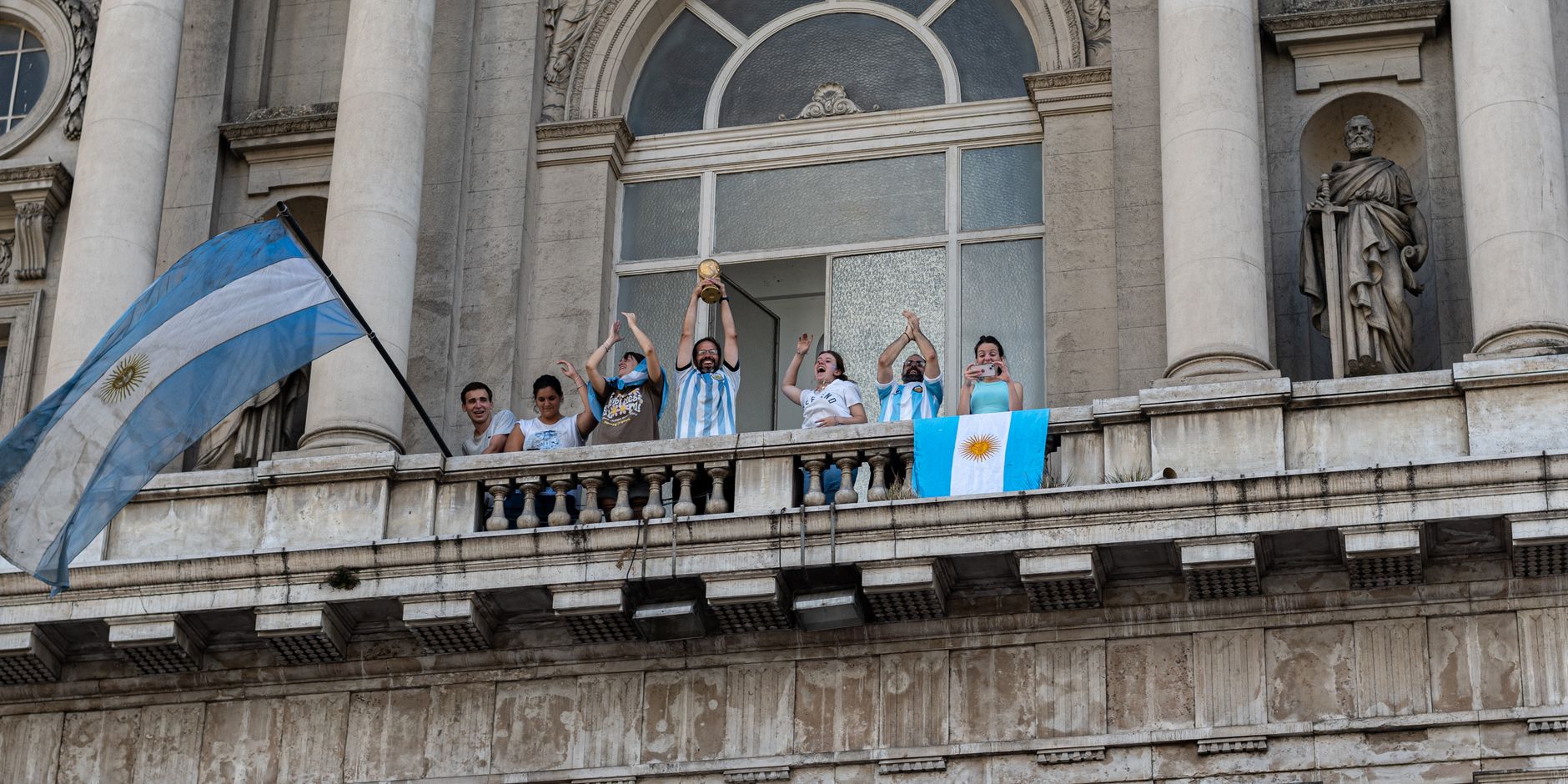
Photo by Fabrizio Velez on Pexels
Would I Use It Again?
Yes, but I would use the process with fewer dramatic claims and more visible uncertainty. The 2026 World Cup is large enough to reward detailed preparation, yet unusual enough to punish templates copied from Germany 2006, Brazil 2014, or Qatar 2022. The 48-team structure, 104-match schedule, 16 host cities, and North American travel network create conditions that deserve their own baseline. Kansas City is not merely a location on a map; its six matches, central position, supporter events, and regional identity show how tournament coverage should connect football operations with the public experience.
My preferred weekly routine would be compact. First, update injuries and expected lineups. Second, review the previous match for tactical changes rather than only the score. Third, check rest, route, weather, and venue. Fourth, compare my probability with the market. Fifth, place no position unless the price clears my minimum edge and the stake fits the bankroll. This sounds boring because it is boring, but boring records are usually where the useful information hides.
A contrarian point is worth making here: the best World Cup football content may not predict the champion correctly. A tournament winner requires a large chain of events to go right, while a good analyst can still provide value by identifying mispriced group matches, tactical mismatches, and overreaction after one result. The Wikipedia overview of the 2026 FIFA World Cup is useful for broad reference, but it should not replace current squad news or match-level work. Use Football Compass for daily team tactics, player stats, and tournament coverage, then verify important details against official FIFA information.
My final verdict is straightforward: 2026 World Cup football deserves a structured, evidence-led approach. Start with confirmed facts, build the matchup, price the uncertainty, and keep your net position visible. The fan experience can be emotional; the analysis does not need to be.
Ready to follow the tournament with a more disciplined match framework?
Photo by Lucia Vergara on Pexels
Frequently Asked Questions
Q: What is the 2026 World Cup football format?
A: The 2026 FIFA World Cup features 48 teams, 12 groups of four, and 104 matches across Canada, Mexico, and the United States. The top two teams from each group advance, along with the eight best third-placed teams, creating a 32-team knockout stage. This is a major change from the 32-team format used at Qatar 2022, so old group-stage assumptions should not be copied without adjustment.
Q: How do I start analysing a 2026 World Cup match?
A: Start by comparing expected goals, chance quality, lineup availability, tactical shapes, rest days, travel, and market odds. Record the team’s recent performances against opponents of similar strength rather than relying only on its last scoreline. Then estimate a probability, compare it with the price, and decide whether the difference is large enough to justify any risk.
Q: What is the difference between a good team and a good betting value?
A: A good team is not automatically good value because value depends on whether the market price underestimates its actual probability. For example, a team estimated at 45% is attractive at odds implying 38%, but unattractive at odds implying 55%. The estimate must also include bookmaker margin, stake limits, fees, promotional terms, and the possibility that your model is wrong.
Q: Why can’t I rely only on FIFA rankings for 2026 World Cup predictions?
A: FIFA rankings provide useful broad context, but they do not fully capture current injuries, tactical matchups, squad rotation, travel, or opponent quality. A highly ranked team can struggle against a compact defensive block, while a lower-ranked side may create problems through set pieces and fast transitions. Use rankings as one input alongside recent competitive data and confirmed lineups.
Q: What should I do if a team’s lineup changes shortly before kickoff?
A: Recalculate the matchup rather than automatically abandoning or increasing a position. Check whether the absent player affects ball progression, defensive coverage, set pieces, or pressing structure, because the role matters more than the player’s reputation. Also review the updated odds and note the decision time, so your later performance audit shows whether the adjustment was logical.
Q: How much money should I risk on 2026 World Cup football?
A: Risk only an amount that you can lose without affecting rent, bills, savings, or daily necessities. A conservative approach uses a small fixed percentage of a separate bankroll, such as 0.5% to 1% per position, with lower stakes when uncertainty is high. Track deposits, withdrawals, turnover, rebates, fees, and net profit separately because a large turnover figure does not mean you made money.
Q: Is the Kansas City FIFA World Cup 2026 experience relevant to match analysis?
A: Kansas City is relevant because it is an official host city with six scheduled matches, major supporter activity, and a FIFA Fan Festival, but its atmosphere should not be treated as automatic sporting evidence. Venue conditions, travel routes, weather, and crowd composition can shape context, while the actual football edge still depends on lineups, tactics, and performance. Use Kansas City as a case study, not a shortcut to a prediction.
Want the latest 2026 World Cup football coverage, player statistics, and tactical analysis?
End of briefing.
Football Compass · Intelligence Division · High-Stakes Analysis